An Exploration of Superhero Representation
by S. T. Finn
If you’ve always wanted to explore what makes a hero super, or learn more about comic book beginnings, diversity, and representation, you’ve come to the right place.
This 10-Part article provides a glimpse into pioneering trailblazers, important first appearances, and the evolution of under-representation in comics.
Part 1 lays the groundwork and sets up our Superhero Criteria.
Part 2 examines the beginning of superheroes (and their predecessors).
Part 3 delves into changing readership imbalances and the romance genre.
Part 4 honors first appearances of important female superheroes.
Part 5 appreciates trailblazing female BIPOC superheroes
Part 6 presents important first appearances of Black superheroes.
Part 7 explores Asian, Hispanic/Latino, and Native American superheroes.
Part 8 celebrates first appearances of superheroes with disabilities.
Part 9 looks at the first gay, lesbian, trans, and nonbinary superheroes.
Part 10 brings it all to a dramatic conclusion.
Part 1: The Preamble
Comic books are and have always been snapshots or mini time-capsules that present cultural perceptions (and misconceptions). They offer a glimpse at prevailing issues and social politics of the time in which they were created.
Sometimes, comics have been a vehicle for social change—often right alongside the super-heroic fun. From a historical perspective, what is left out can be just as important as what remains.
But like so many forms of cultural art, there will always be deeper layers to uncover and enjoy in comic books … if one chooses to look.
In our case, we’re going to look at the first appearances of predominantly underrepresented superheroes in comic books, from the earliest days of comics up until much more recently.
Particularly, we’ll explore superheroes who were female, people of color, disabled, or those who did not fit into accepted gender norms.
It should be stated upfront … while the word “diversity” has become a somewhat loaded concept these days, in this article there will be no politics or judgments.
We’re objectively looking at representation (or under-representation) in comic books from a historical perspective. We’re here to recognize and appreciate important trailblazers, those who were and will always be a part of comic book history.
However, before we shine a light on our under-represented heroes, we’ll need some context—and a clear definition of what we’ll be exploring in this series.
So, let’s start at the beginning…
The First Comics
Comic books have had a long and interesting history. Beginning in the 1600s, the first sequential art on paper appeared in Europe. The First Prototype Comic Book (Histoire de M. Vieux Bois) was published in France (1837) and is considered the earliest precursor to the modern comic book.
Published in English as The Adventures of Mr. Obadiah Oldbuck (1842) , it became the first prototype published in the United States, marking the first known American example.
It wasn’t until 1897 that the term “comic book” was first used on the back cover of The Yellow Kid in McFadden’s Flats (a collection of reprinted newspaper strips).
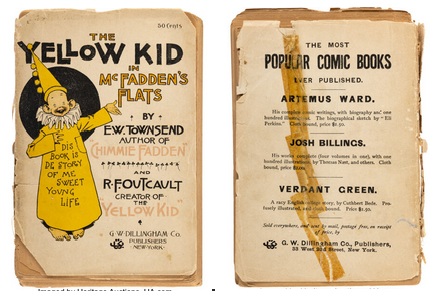
Thus began the Platinum Age of Comics (1897–1938), a historic period that includes the birth of early newspaper comic strips and the earliest bound collections of sequential art.
It wasn’t until around 1933 that magazine-style, saddle-stitched, and staple-bound comic books as we know them were born.
Famous Funnies: A Carnival of Comics (1933) is widely regarded as the first mass-marketed American comic book.
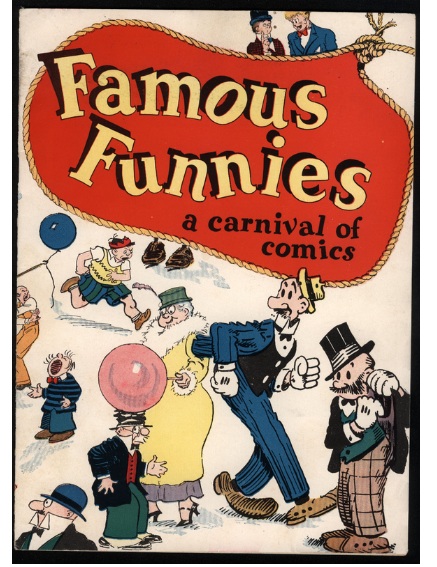
But the first comic book to feature all-original material rather than newspaper reprints wasn’t until 1935, with New Fun #1 (published by National Allied Publications, which later became DC Comics).
The next big comic book milestone occurred in 1938, when Action Comics #1 introduced the world to Superman (Clark Kent)—ushering in what is now known as the Golden Age of Comics (1938–1956).
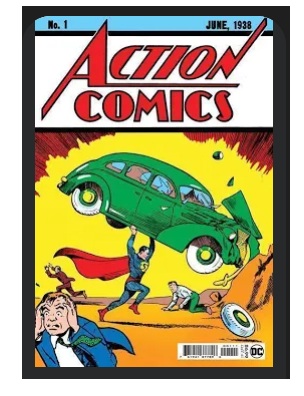
Welcome to the Golden Age
In the Golden Age, superheroes as we know them were born, superhero titles became enormously popular, and the comic book industry experienced its first major boom.
However, superheroes didn’t emerge in a vacuum. There were many unsung heroes who paved the way for Superman, Batman, Wonder Woman, Captain America, and countless other comic book characters that are now household names.
Before we dive into who those first heroes were, we should ask: What exactly makes a superhero … super?
The quickest answer might seem easy: Powers.
But Batman has no superpowers. Neither does Iron-Man, Elektra, Blue Beetle (Ted Kord), the Falcon, or countless other superheroes.
So, how do we determine which heroes are superheroes?
Ground Rules: A Superhero Criteria
There are many definitions of what a “hero” is (for starters, someone who cares enough to stand up, stand for, or stand against something or someone in the name of justice).
Likewise, there are many kinds of comic books (superhero, horror, romance, crime, western, humor, etc.). So, we should state upfront something that might seem obvious: Not all heroes are super … and not all comic books feature superheroes.
Therefore, in this article, we’ll need a Superhero Criteria.
For our purposes, a superhero is defined as a crime-fighter who fights for justice, and MAY have a mask, cape, or costume, and/or a secret identity, but MUST possess at least one of the following: 1) a special, peak-human, or unnatural skill or talent; 2) unique tech/gadgets used for crime-fighting; 3) a supernatural ability of some kind; OR 4) an actual super-power.
Just having a secret identity or wearing a mask doesn’t qualify a hero as super (though they may still be a hero, a crime-fighter, and/or a vigilante). Not having a mask or cape doesn’t disqualify someone either.
For example, Superman and Wonder Woman do not wear masks, but they do have costumes and, more importantly, they have special superhuman powers. Similarly, Aquaman and Submariner have costumes without masks, but they are from Atlantis and both possess peak-human (or superhuman) qualities.
Many non-powered superheroes (like Batman, Black Widow, Green Arrow, Hawkeye,etc.) also fit the Superhero Criteria because they possess special peak-human abilities—whether that means remarkable fighting ability, extraordinary intelligence, weapons-mastery, etc.
Same with Iron-Man, Blue Beetle, and the Falcon, who utilize tech/gadgets (including armored suits) to fight crime.
On the other hand, Tarzan, Red Ryder, and Sheena do not qualify as superheroes (although they can certainly be regarded as heroes in every other sense of the word).
While they don’t possess a uniquely special or supernatural ability; a mask, cape, or costume; a secret identity; unique tech/gadgets specifically used for crime-fighting; and/or an actual super-power, they often do fight for justice and they have peak-human qualities.
However, separating those kinds of heroes (as well as non-super masked crime-fighters and vigilantes) from superheroes can be a bit tricky—especially when it comes to heroes who possess expert fighting skills (like Green Hornet and Mockingbird), or remarkable sword-skills (like Colleen Wing and Zorro), or those who possess a mastery of other weapons (like Green Arrow or the anti-hero Punisher).
Some characters on that list might not technically classify as supers (Zorro and Green Hornet), but some clearly deserve to be considered superheroes. But … why?
For our purposes, we’ll add another important aspect to our Superhero Criteria: To be considered a superhero (rather than “just” a hero), other heroes or villains WITH super-powers or supernatural abilities MUST exist somewhere in the same fictional universe—even if the individual superheroes (like super-sleuth Batman or super-spy Nick Fury) have no powers.
Otherwise, we’re dealing with very remarkable people … not supers.
To illustrate that point further, Zorro is a masked, caped hero with remarkable, peak-human sword-fighting ability and a secret identity. Without the additional criterion above, we would have to consider Zorro a superhero, which doesn’t quite fit (although he is one of my favorite heroes of all time).
Zorro does not qualify as a superhero because NO ONE in his fictional world has supernatural abilities or superpowers. That means he can’t be a superhero in this article.
Similar with Robin Hood, Sheena, Conan, and many other heroes who exist in a world where they are primarily the only heroes around. The fact that NO superheroes exist in their fictional worlds automatically removes them from our consideration. They are “just” awesome heroes, not super.
The same goes for many pre-Superman vigilantes (some of whom we will look at next).
On the other hand, while Green Arrow, Hawkeye, Black Widow, Nick Fury, or Shang-Chi (without the Ten Rings) each possess no actual superpowers, they CAN stand toe-to-toe with super-powered people who exist in theircomic book universes.
So, they can be considered superheroes according to our criteria.
The last point to mention about our Superhero Criteria is that, with a few exceptions, this series of articles primarily explores superhero representation in mainstream American comics.
(We may mention a few relevant or noteworthy characters who fall outside these parameters, but it will be to provide context or a better understanding of the comics and characters that followed.)
Now that’s out of the way…
To dive in and learn more about the beginning of superheroes and their predecessors, check out Part 2.
A lifelong collector of comic books, S. T. Finn is an author and artist who lives in a cabin in the Catskill Mountains. His stories and artwork can be found at ShadowfaxBooks.com.
 Shadowfax Books