An Exploration of Superhero Diversity and Representation
by S. T. Finn
If you’ve always wanted to learn more LGBTQ+ superheroes in comics, we gotcha covered.
NOTE: This 10-Part series of articles is not about politics or judgments. The goal is to present objective perspectives on historic milestones in comic book history. Dive in to explore pioneering trailblazers, important first appearances, and the evolution of under-representation in comics
Part 1 lays the groundwork and sets up our Superhero Criteria.
Part 2 examines the beginning of superheroes (and their predecessors).
Part 3 delves into changing readership imbalances and the romance genre.
Part 4 honors first appearances of important female superheroes.
Part 5 appreciates trailblazing female BIPOC superheroes
Part 6 presents important first appearances of Black superheroes.
Part 7 explores Asian, Hispanic/Latino, and Native American superheroes.
Part 8 celebrates first appearances of superheroes with disabilities.
Part 9 looks at the first gay, lesbian, trans, and nonbinary superheroes.
Part 10 brings it all to a dramatic conclusion.
NOTE: As we discussed in Part 1, for the purposes of this article, a superhero is defined as a crime-fighter who fights for justice, and MAY have a mask, cape, or costume, and/or a secret identity, but MUST possess at least one of the following: 1) a special, peak-human, or unnatural skill or talent; 2) unique tech/gadgets used for crime-fighting; 3) a supernatural ability of some kind; OR 4) an actual super-power.
ALSO, if a hero does not possess a superpower, our Superhero Criteria stipulates that supernatural abilities MUST exist somewhere in the fictional universe for the hero to be considered a superhero (otherwise, they are “simply” a hero, vigilante, or crime-fighter).
With some exceptions, this article focuses mainly on mainstream American comics.
Part 9: LGBTQ+ Power
Although superhero females, people of color, and people with disabilities have often been excluded from mainstream comics since the beginning, at least some characters have appeared in comics throughout the Golden Age, Silver Age, and Bronze Age.
Not so with LGBTQ+ characters.
Mostly, this was because any overt mention of homosexuality in mainstream American comics was strictly forbidden by the Comics Code Authority between 1954 and 1989.
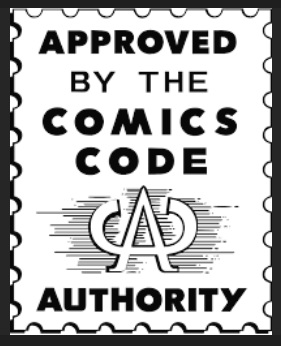
(See more about the Comics Code in Part 3.)
To get around these outdated rules, some later mainstream comics contained subtle hints or they used subtext to convey an LGBTQ character’s sexual orientation or gender identity.
The comic book industry was terrified of any controversy or perception of homosexuality, mostly due to a major backlash regarding Batman and Robin in the mid-1950s…
What Exactly WAS the Comics Code?
In his book, Seduction of the Innocent (1954), psychiatrist Fredric Wertham alleged that the Batman and Robin’s “relationship” represented a “homosexual fantasy,” promoted a “gay lifestyle,” and “morally corrupted” young readers.
This opinionated claim led to widespread backlash, plummeting sales, and the speedy introduction of important female characters as love interests (see Batwoman and Bat-Girl below).
Combined with concerns about violence and a glorification of villains in comic books, the backlash nearly destroyed the comic book industry altogether—and it led to the creation of the Comics Code Authority (as a way to assuage the fears of anxious parents and avoid “moral regulation” by the American government).
To counter these “alarming” claims about Batman and Robin, DC Comics introduced Batwoman (Kathy Kane) in July 1956 and Bat-Girl/Batgirl (Betty/Bette Kane) in 1961 to promote romantic female love interests for Batman and Robin.
In 2006 (as a statement to how much times had changed), Batwoman was reintroduced as Kate Kane—the first prominent superhero to be openly lesbian (see below).
Now that The Code is out of the way, it’s time to explore some of the primary first appearances, milestones, and important LGBTQ+ comic book superheroes.
LGBTQ+ Representation in Comics
Appearing in the late Bronze Age, the character widely recognized as the First Gay Superhero in mainstream comics was Marvel’s Northstar (Jean-Paul Beaubier).
Northstar debuted in The Uncanny X-Men #120 in 1979—but not as openly gay.
While intentionally creating Northstar to be a gay superhero, John Byrne wasn’t allowed to reveal the character as openly gay, due to Marvel’s editorial restrictions of the time (and the Comics Code, as mentioned above).
But Byrne often included hints to readers who were paying attention.
It wasn’t until years later, in Alpha Flight #106 (1992), that Northstar officially came out—a landmark moment in comic book history. This “reveal” was widely recognized as the first time a major mainstream Marvel superhero openly declared their homosexuality (in very direct language).
At the time, this comic book issue generated significant publicity (and controversy). Because it received so much mainstream media attention, the issue sold out in a week (despite Alpha Flight not being a particularly popular title).
Although they were villains, Cannon and Saber were introduced in Vigilante #5 as the first openly gay couple in DC Comics (1984).
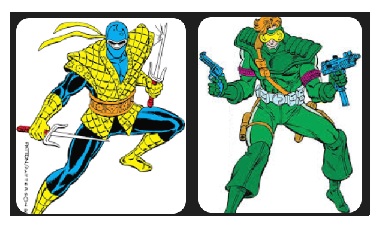
That means the superhero magician Extraño (Spanish for Strange), debuting in Millennium #2, was DC’s first openly gay superhero (1988).
Another supervillain, DC’s Pied Piper (Hartley Rathaway), became one of the first previously established characters to be revealed as gay (in the pages of The Flash in 1991).
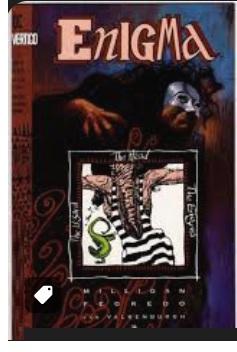
In 1993, DC Vertigo launched Enigma, featuring the first gay lead in a comic series and also included the first same-sex kiss to appear in comic books.
Much later (in 2002), Wildstorm’s Apollo and Midnighter tied the knot in The Authority #29, marking the first same-sex wedding in a mainstream superhero comic.
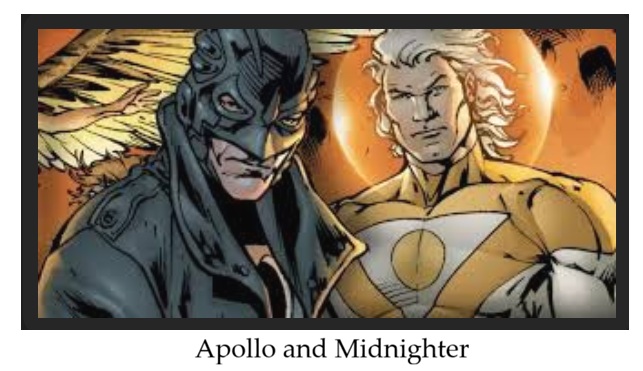
Three years after that (2005), Wiccan and Hulkling appeared in Young Avengers, becoming one of Marvel’s most prominent gay couples.
When Northstar married his partner (Kyle Jinadu) in 2012,he made history once again in Astonishing X-Men #51. This issue presented the first depiction of a same-sex wedding between two superheroes in Marvel comics.
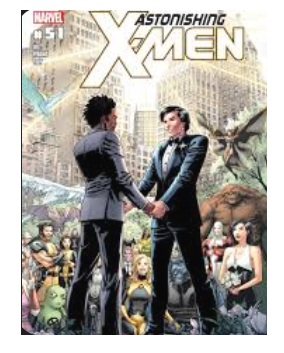
(While Northstar’s wedding in 2012 received much more mainstream media attention, and is frequently cited as the first gay wedding in Marvel history, DC Comics presented Apollo and Midnighter’s wedding a decade earlier.)
Although Metropolis police captain Maggie Sawyer (DC Comics, 1987) and Marvel’s Victoria Montesi (Marvel Comics, 1992) were the first openly lesbian characters to appear in mainstream comics, Batwoman (Kate Kane) became the first prominent lesbian superhero to headline a monthly DC comic when she was reintroduced in 2006.
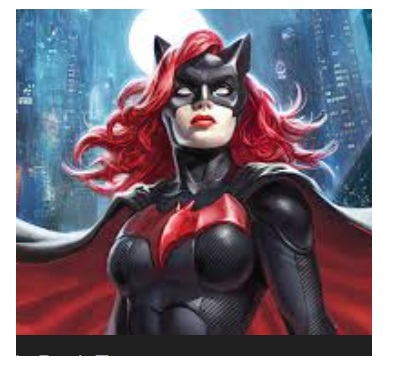
(Kate Kane’s former partner, Renee Montoya / The Question was also the first Latina superhero—see Part 5.)
In All-New X-Men #40 (2015), Iceman was revealed as gay, establishing one of Marvel’s highest-profile LGBTQ+ characters in comics.
The same year, Catwoman (Selina Kyle) was established as bisexual in DC continuity.
The First Trans-Supers
Created by transgender writer Rachel Pollack, Coagula (Kate Godwin) debuted in Doom Patrol #70 (1993) as DC’s first transgender superhero.
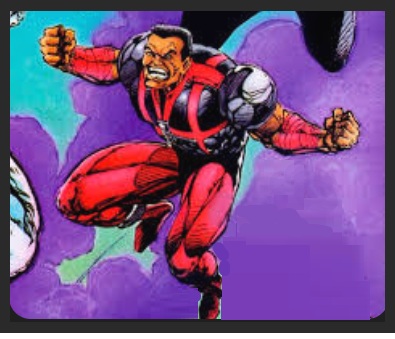
Also in 1993, Masquerade was introduced in Milestone Comics’ Blood Syndicate, one of the first trans male characters to appear in mainstream superhero comics.
(See Part 5 for more about the groundbreaking company Milestone Comics.)
The First Nongender / Nonbinary Superhero
In 2020, Marvel Comics introduced a super who could control ice—Snowflake, who is considered one of the first explicitly non-binary / non-gender superheroes.
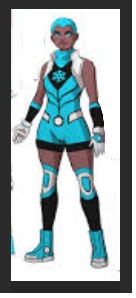
Characterized as a “burly character” with a blue-and-pink aesthetic, Marvel flipped typical gender color-coding to make their point.
At the time, Snowflake’s name and concept received significant backlash and was considered both insensitive and cliché. However, some people viewed the move as a well-intentioned (if heavy-handed) step toward greater inclusivity in comic books.
Cross-Dressing Heroes
With absolutely no segue whatsoever, I wanted to mention two other mostly forgotten characters from the Golden Age…
Madam Fatal is notable for being a male hero who dressed as an elderly woman to fight crime. Debuting in May 1940, he is the first cross-dressing hero in comics (though he possessed no superpowers).
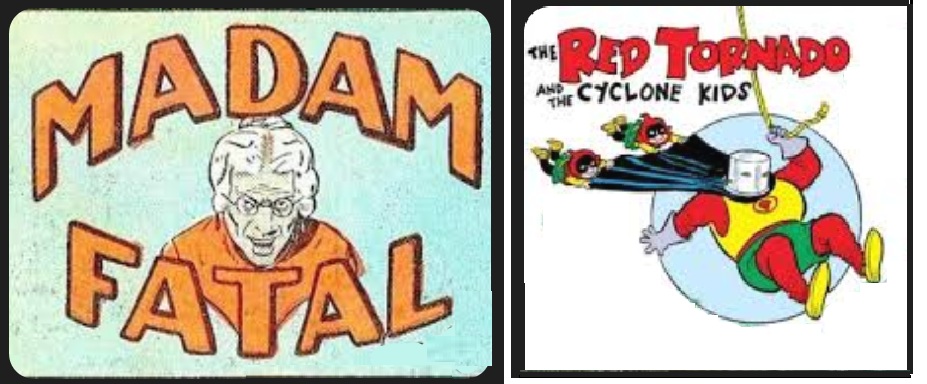
Later that same year (in November 1940), the original Red Tornado (Ma Hunkel) became the first cross-dressing heroine. Considered a comedic, non-powered character, she fought crime wearing long johns and a cooking pot on her head.
A middle-aged housewife in New York City, Ma Hunkel was one of the first superhero parodies and a pioneering crime-fighting female character pretending to be a man.
However, like Madam Fatal, that version of Red Tornado did not have superpowers.
NOTE: By necessity, this examination of representation in comics had to leave out countless other worthy and notable contributions—characters, cultures, and communities that I would have loved to include, if there was time and space. Perhaps someone else can pick up the mantle and take on that mighty task…
For the dramatic conclusion to our exciting series, check out Part 10, our final segment in this 10-Part series.

A lifelong collector of comic books, S. T. Finn is an author and artist who lives in a cabin in the Catskill Mountains. His stories and artwork can be found at ShadowfaxBooks.com.
 Shadowfax Books